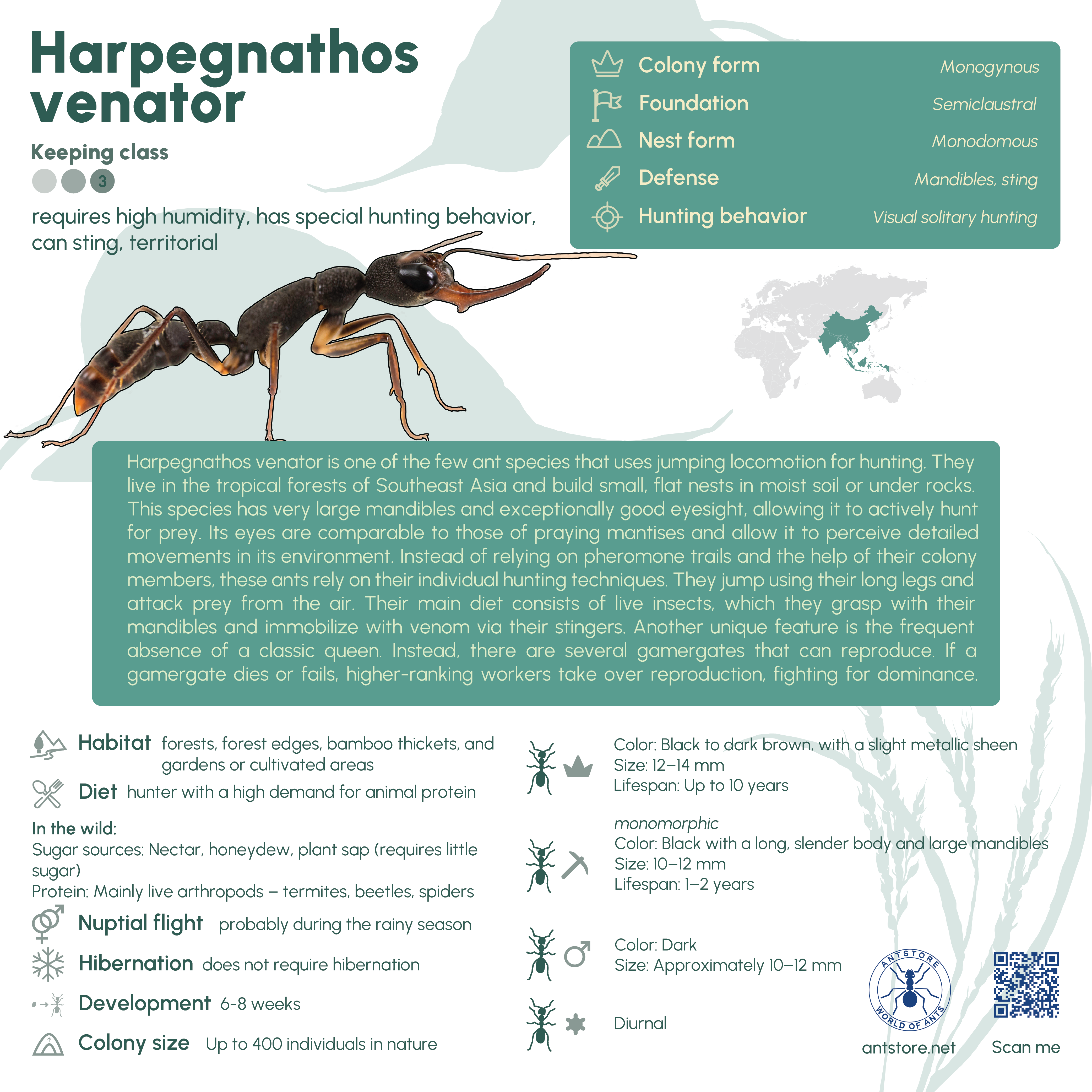
(2) due to its origin, it has higher requirements for humidity and temperature
Distribution:
Southeast Asia (India to Malaysia)
Habitat:
tropical rainforest
Colony form:
monogynous
Queen:
Size: 14 - 16mm Color: head, thorax and gaster black, mandibles and legs reddish brown, enlarged thorax
Worker:
Size: 14 - 16mm Color: head, thorax and gaster black, mandibles and legs reddish brown,
Soldiers:
not present
Male:
Size: - Color: -
Food:
mainly live insects e.g. flies, crickets
Humidity:
Arena: 60 - 70% Nest area: 60 - 80%
Temperature:
Arena: 21 - 30°C Nest area: 24- 28°C
Hibernation:
no
Nest form:
soil nests in moist clay
Formicarium type:
Ytong/plaster nest with external arena, XL farm with red sand-clay substrate, natural setup
Formicarium size:
Size: L - XL
Substrate:
Farm: red sand-clay, Ytong, plaster Arena: sand-clay
Planting:
tropical rainforest
Decoration:
branches, leaf litter, stones, cork
Description:
This ant species can jump about 8 - 10cm, walk backwards, and has very good eyesight. Viewed in profile, the mandibles are shaped similarly to saber teeth. They show interesting hunting behavior by shaking their gaster before attacking. These ants can climb glass only very poorly, if at all.
Development:
Nuptial flight: at the beginning of the rainy season, gamergate formation possible all year round
Founding: semi-claustral
Colony size: usually 200 to a maximum of 400 individuals
Offer quantity:
one mated queen and workers (see selection); brood (varies depending on season and development)


 Phone: "with AI assistant" – Talk to Anton, your AI Ant Expert!