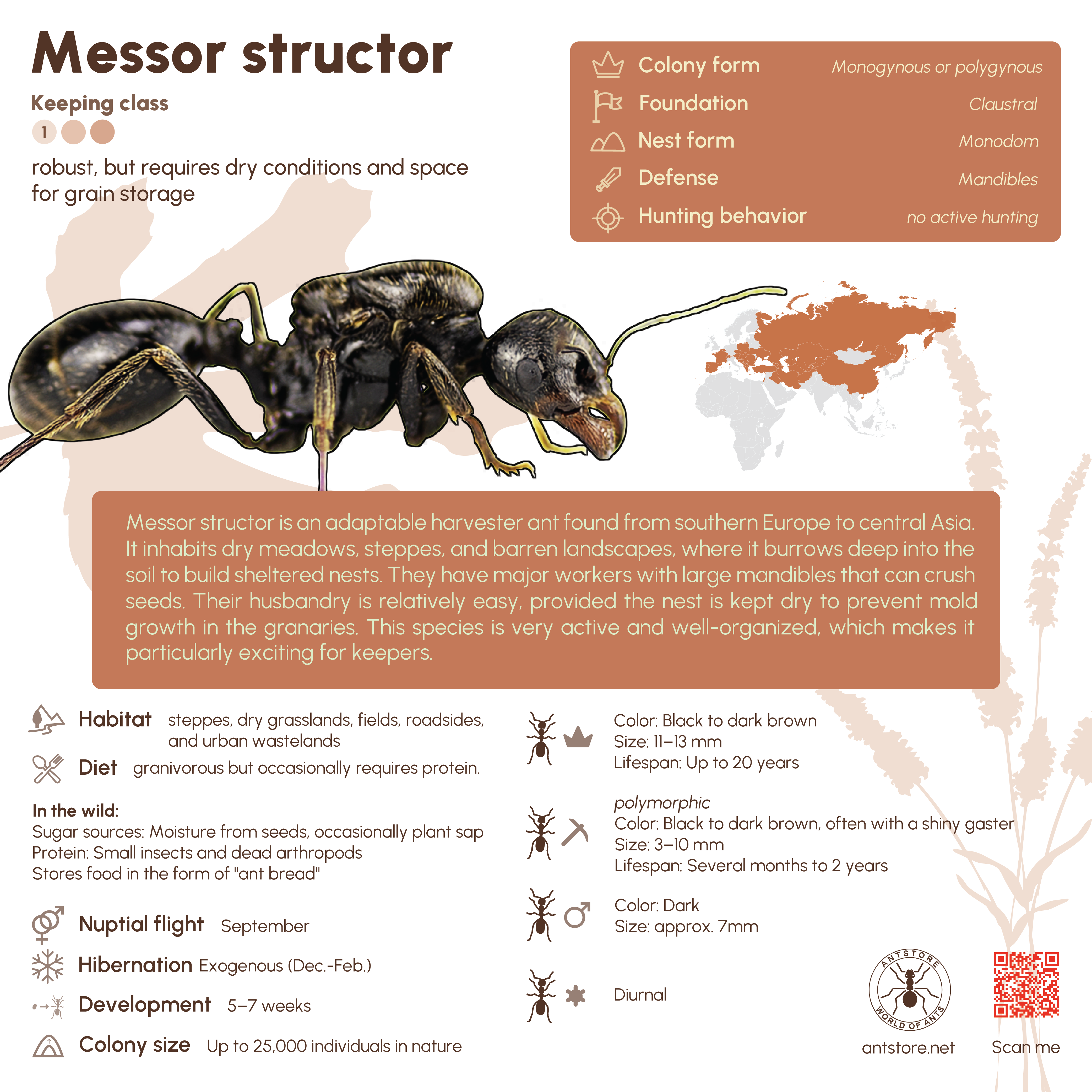
Messor structor


| Latin Name: |  |
Messor structor |
| Trivialname: |  |
- |
| Taxonomy: |  |
Subfamily: Myrmicinae Tribe: Pheidolini |
| Keeping Level: |  |
(1) Species from Southern Europe with higher requirements towards food and climate |
| Distribution: |  |
Southern Europe, Southerneuropean Peninsula |
| Habitat: |  |
Sand- and shrub areas |
| Colonyform: |  |
polygyne |
| Queen: |  |
Size: 9,5 - 10,5mm Colour: shiny black |
| Worker: |  |
Size: 4 - 9,5mm Colour: shiny black, head reddish brown (major worker) |
| Soldier: |  |
not present |
| Males: |  |
Size: 7 - 8mm Colour: black |
| Nutrition |  |
Mostly seeds from different rampant plants (also grass) but insects too |
| Airhumidity: |  |
Arena: 30 - 50% Nestpart: 50 - 70% |
| Temperature: |  |
Arena: 25 - 30°C Nestpart: 21 - 26°C |
| Hibernation: |  |
yes, from end of November until end of February at 15°C |
| Nestform: |  |
Build their nest in soil and under stones |
| Kind of Formicaria: |  |
Farm, Farmbasin, Basin, Framebasin, Island, Acrylcylinder, Ytong/Plasternest, Digfix |
| Formicaria size: |  |
Size: M |
| Substrate: |  |
Farm: Sand-Loam Arena: Sand, Sand-Loam |
| Planting: |  |
similar to savanah areas with grass and other plants |
| Decoration: |  |
Branches, roots, treeneedels, stones |
| Description: |  |
This species is a highly granivor ant which collects all kinds of small seeds and chew them to so- called antbread. Most of their waterrequirements are covered through seeds and insects. Honeywater is only accepted when there is a lack of moisture. Messor structor tends to drown in open water so it is necessary to cover waterplaces with little stones or cotton. |
| Development: |  |
matingflight: september and April/May founding: claustral (without feeding) colonyage: up to 25 years colonysize: up to 10.000 Individuals |
| Quantity: |  |
one fertilized queen with workers (see selection); brood (depending on the season and development) |
| Weblinks: |  |
- Forum - Reference |
Ant Information Sheet